
- 01792-220191, 09839141955, 06390845955
- SCO No. 2 & 3, Block-B;Office No.-249A; 2nd Floor, Motia Plaza Baddi-173205; Distt. Solan (H.P.)


ORABEST (MOUTH PAINT)
September 19, 2019
PHYSITO OIL
September 19, 2019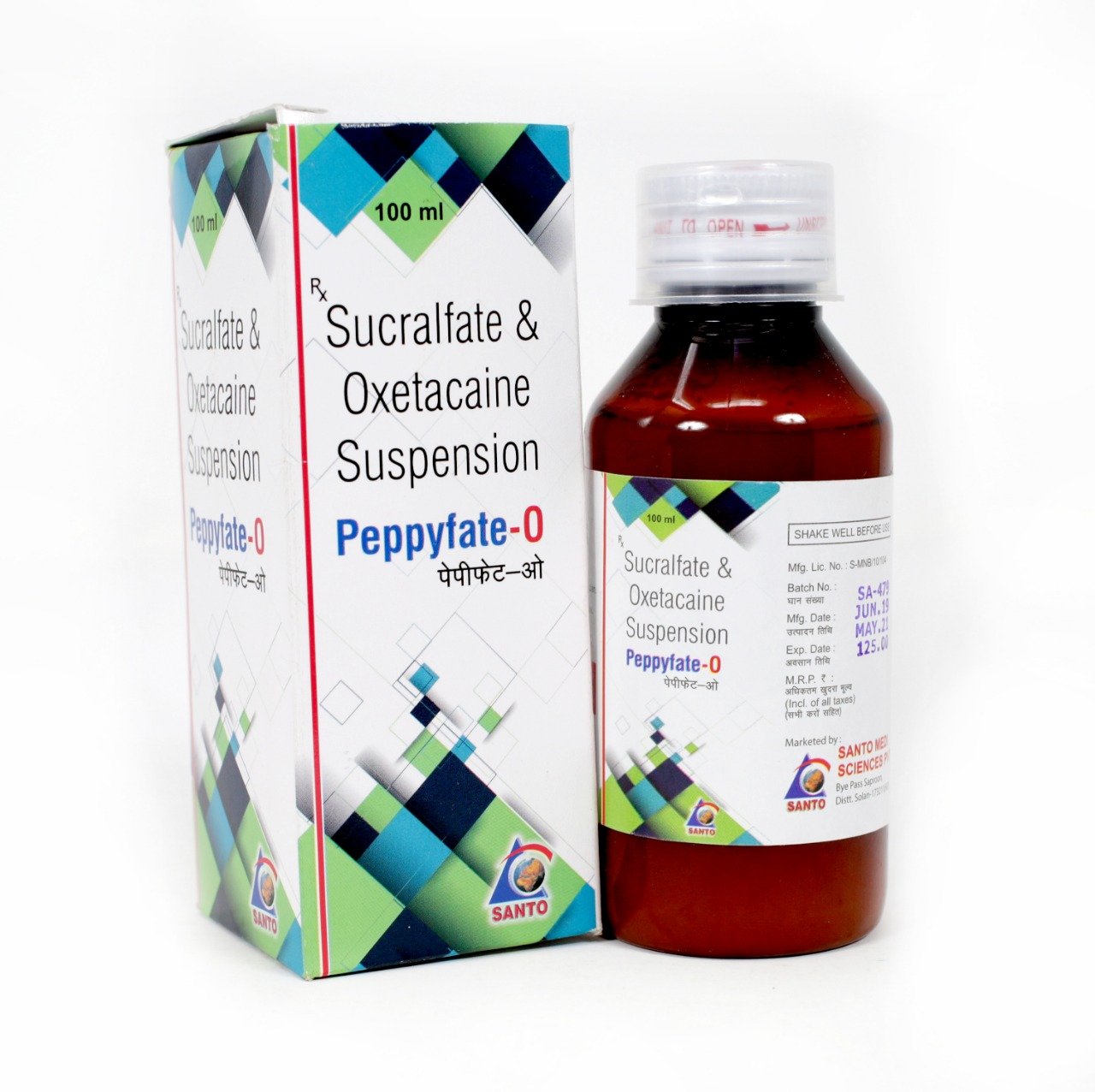
PEPPYFATE-O (SUSPENSIONS)
| Brad Name | Peppyfate-O (Suspensions) |
| Composition | Sucralfate 1 gm+ Oxetacaine 20 mg /10 ml Suspensions |
Description
Sucralfate 1 gm+ Oxetacaine 20 mg /10 ml Suspension
Sucralfate is used short-term (up to 8 weeks) to treat an active duodenal ulcer. Sucralfate works mainly in the lining of the stomach and is not highly absorbed into the body. sucralfate adheres to ulcer sites and protects them from acids, enzymes, and bile salts. Sucralfate can heal an active ulcer, but it will not prevent future ulcers from occurring. Sucralfate may also be used for purposes not listed in this medication guide.
The liquid form of sucralfate should never be injected through a needle into the body, or death may occur.
Side Effects
- Constipation, dry mouth, upset stomach, gas, and nausea may occur. If any of these effects persist or worsen, notify your doctor or pharmacist promptly.
- Remember that your doctor has prescribed this medication because he or she has judged that the benefit to you is greater than the risk of side effects. Many people using this medication do not have serious side effects.
- Tell your doctor right away if these unlikely but serious side effects occur: an unusual/persistent feeling of fullness in the stomach, nausea/vomiting/stomach pain especially after meals.
- A very serious allergic reaction to this drug is unlikely, but seek immediate medical attention if it occurs. Symptoms of a serious allergic reaction may include: rash, itching/swelling (especially of the face/tongue/throat), severe dizziness, trouble breathing.
Precautions
Before taking sucralfate, tell your doctor or pharmacist if you are allergic to it; or if you have any other allergies. This product may contain inactive ingredients, which can cause allergic reactions or other problems. Talk to your pharmacist for more details.
Before using this medication, tell your doctor or pharmacist your medical history, especially of: kidney problems, stomach/intestine problems (e.g., delayed gastric emptying), tube feeding.
Kidney function declines as you grow older. This medication contains aluminum, which is normally removed by your kidneys. Therefore, elderly people may be at greater risk for developing high aluminum levels while using this drug with other products that contain aluminum (e.g., antacids).
If you are pregnant, tell your doctor before using sucralfate.
Interactions
Drug interactions may change how your medications work or increase your risk for serious side effects. This document does not contain all possible drug interactions. Keep a list of all the products you use (including prescription/nonprescription drugs and herbal products) and share it with your doctor and pharmacist. Do not start, stop, or change the dosage of any medicines without your doctor’s approval.
Some products that may interact with this drug include: antacids that contain aluminum, certain antibiotics (including quinolones such as ciprofloxacin/levofloxacin/ofloxacin, tetracyclines), digoxin, ketoconazole, penicillamine, phenytoin, quinidine, thyroid medications (such as levothyroxine, liothyronine).